Updated: Sep 14
Let the Evening Change
A calmer night often begins
with a different kind of light.


There’s a specific time, usually somewhere between 9 and 11 p.m., when I realize I’m still living like it’s 2 p.m. The laptop is closed but somehow still present. The overhead lights are on, the dishes are giving me side-eye, and my brain is either replaying the day or already drafting tomorrow’s to-do list.
We say we want to rest, but our environment keeps telling a different story. Bright lights. Open tabs. A sink full of intentions. It’s like the house itself didn’t get the memo.
The evening isn’t just the absence of work. It’s a transition. And like any transition, it helps to have a few cues... A change in light, a different scent, a small ritual that tells your brain: we’re in a new chapter now.
A calmer night doesn’t need a lot, just a touch more support.

01 | THE IDEA
Your environment can
help you exhale.
We often try to change how we feel by force. Be calmer. Think less. Just relax. But your environment is already speaking to your nervous system, whether you ask it to or not.
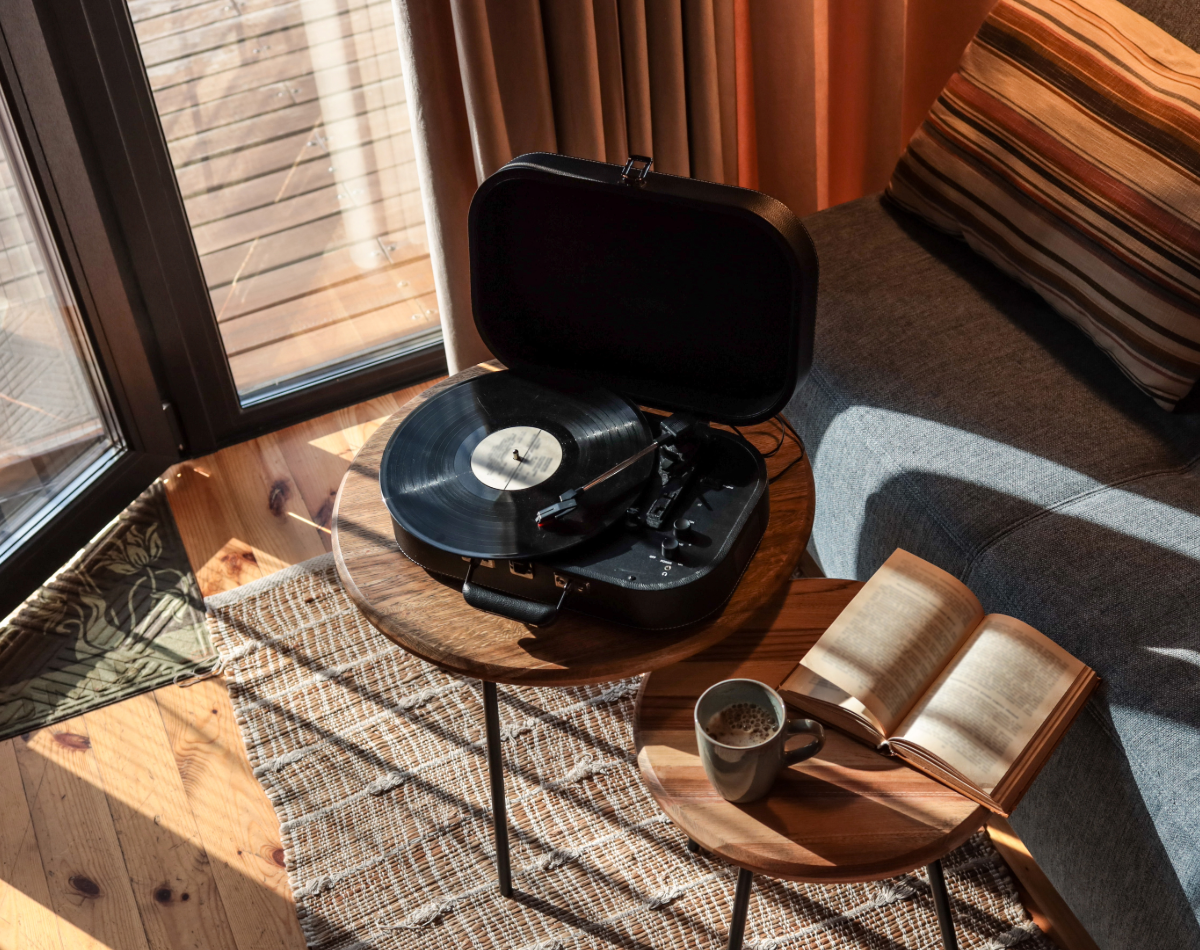
Dimmer lights, softer textures, a clean nightstand, a familiar scent. These are simple, physical cues that help your brain shift out of doing mode. They won’t erase your to-do list, but they can make it easier to stop living inside it.

02 | The Science
Light changes more than just the mood.
A study from the University of Surrey, led by chronobiologist Professor Russell Foster, found that exposure to room light in the evening can significantly suppress melatonin levels, even at relatively low intensities. Participants who were exposed to evening light took longer to feel sleepy and had reduced melatonin compared to those in dim light conditions.
In other words, the light in your home at night can literally tell your brain it’s still daytime, even when your body is tired.
This doesn’t mean you need to live in darkness. It just means small changes, like using lamps instead of overheads, can actually help your body do what it wants to do: wind down.
See full reference →

03 | Practical Application
Create a closing signal.
Pick one or two cues that mark the end of the day. It could be dimming the lights, putting your phone in another room, making a cup of something warm, or diffusing Lavender and Copaiba. Maybe it’s a short stretch, a face wash that actually feels good, or clearing just one surface so tomorrow feels a little kinder.
Don't try to do more. Give your brain a reliable signal that the workday is over enough, and it’s safe to soften.


04 | THE PLEASURE PART
Evenings are better when they feel good.
Rest isn’t just a biological necessity, it’s a pleasure, and pleasure matters. A soft lamp, clean sheets, a scent you love, a book that isn’t about productivity… these are not frivolous. They’re part of creating a home that supports the life you actually want to live.
Bring in one thing to your room that makes the night feel like a little ahhhhhh.. exhale.
05 | A GENTLE CHALLENGE
Change one thing tonight.
Swap the overhead light for a lamp. Put your phone out of reach. Diffuse Lavender and Copaiba. Clear your nightstand. Nothing crazy...
Download
The wind-down ritual


Comments